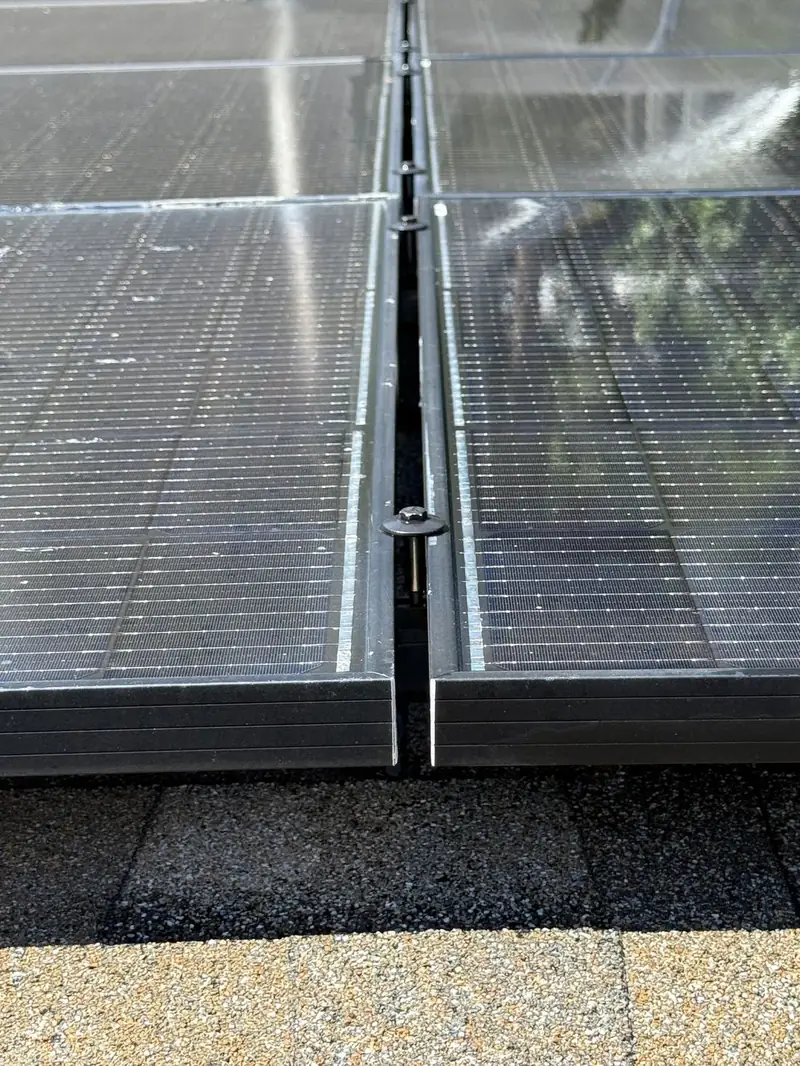
By Blake Hendrickson, owner of SevenfoldFL. Updated September 30, 2026.
Short answer: no, you shouldn't pressure wash solar panels. High-pressure water can force moisture past seals and into junction boxes and frames, wear down the anti-reflective coating on the glass, and crack older or already-stressed panels. Panel makers including Q CELLS, Tesla Solar and SolarEdge warn against pressure washers and abrasive methods in their owner guidance.
Why pressure is the problem
- Seals and junction boxes. Panels are sealed against rain, not against a concentrated jet of water at close range.
- The anti-reflective coating. This thin layer helps the glass let in more light. Pressure and grit act like sandpaper on it.
- Micro-cracks. Sudden force on the glass, especially on a hot panel hit with cool water, stresses the cells underneath.
- Warranty questions. Cleaning with methods the manufacturer warns against can complicate a warranty claim.
What about a garden hose?
A gentle rinse is safer than a pressure washer, but tap water has a mineral problem. In Florida's sun it dries fast and leaves a spotty mineral haze that attracts more dirt. A hose also won't lift bonded bird droppings, salt film or pollen film; those need a soft brush.
How professionals clean panels
We use extension poles with soft boar's-hair brushes and deionized water, which has the minerals removed so it dries spot-free. The water flows at low pressure through the brush head, and nobody stands on the panels. Where a panel manufacturer allows it, a solar-specific cleaner is used on stubborn spots. That's the whole method, and it's why cleaning doesn't put your system or warranty at risk.
Should you clean them yourself?
Ground-mounted panels you can reach safely are a reasonable DIY job with a soft brush and low-pressure water early in the morning, before the glass heats up. Roof-mounted panels are a different story: falls from roofs cause serious injuries every year, and wet panels are slippery. If your panels are on the roof, we'd rather you call us.